 Phoenicia Tech. Co., Ltd.


Phoenicia’s 6th Anniversary & Q1 Team Building Event
1517Shenzhen Phoenicia Technology is 6 years old today!
Read MoreSite Search
On July 4, the National Fire and Rescue Administration, the Ministry of Industry and Information Technology, and the State Administration for Market Regulation jointly issued the Guidelines for Shared Electric Bicycle Battery Swapping (Trial) (hereinafter referred to as the “Guidelines”). These Guidelines represent a major boost for the industry, signaling that shared battery swapping is poised for explosive growth.
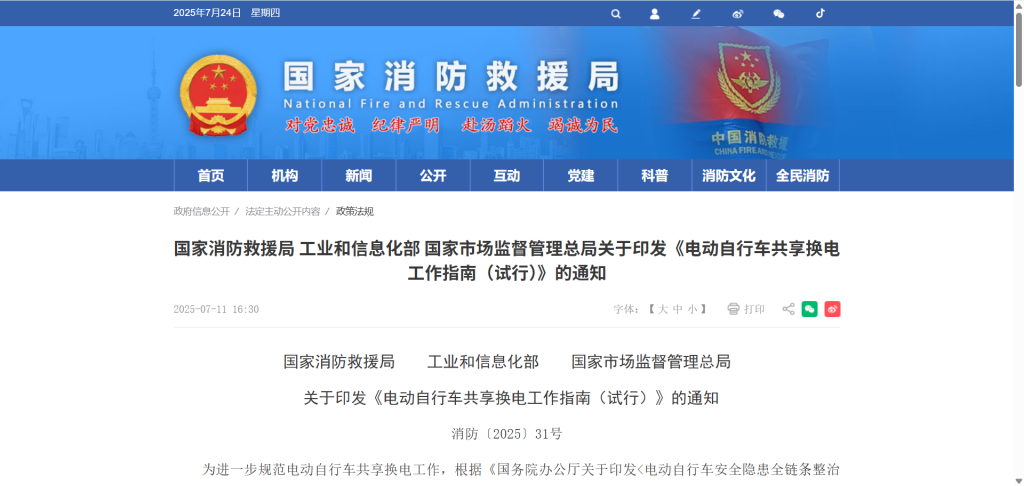
The Guidelines primarily target the construction and operation companies engaged in shared battery swapping business. They set forth specific requirements and standards covering batteries, swapping cabinets, swapping operations, and end-of-life recycling, establishing a closed-loop management mechanism from deployment to disposal. The strong and concrete signals sent by the Guidelines include the following aspects.
01 Industry standardization will drive inferior products out of the market.
For a long time, the shared electric bicycle battery swapping industry has lacked unified standards, leading to a wide variety of battery specifications on the market with inconsistent quality. The newly issued Guidelines clearly stipulate that replacement batteries used in swapping cabinets must comply with several national standards, including the Technical Specifications for Lithium‑ion Batteries for Electric Bicycles and the Safety Technical Specifications for Electric Bicycles. In addition, the use of second‑life (tiered utilization) batteries is strictly prohibited. These requirements will effectively eliminate non‑compliant small brands, push the industry toward standardization, and ensure that users have access to safer, more reliable products. Compatibility issues that have long hindered the swapping experience will also be resolved, leading to a significant improvement in industry efficiency.
02 “Swap over charge” becomes the mainstream, with safety assured.
Frequent safety incidents during electric bicycle charging, along with persistent violations such as “charging upstairs” and “flying‑wire charging,” have become major concerns. Shared swapping greatly enhances safety through centralized charging management — for example, smart swapping cabinets feature automatic shutdown in case of overload or overheating. In addition, swapping cabinets are equipped with fire detection, audible/visual alarms, and automatic fire suppression. If thermal runaway occurs in one compartment, it will not spread to adjacent compartments. The Guidelines encourage the adoption of “swap over charge.”Further promote the swapping model to reduce unsafe charging practices.This undoubtedly adds a “safety lock” to the lives and property of residents, giving everyone greater peace of mind when riding.
03 Green mobility takes another step forward as lithium batteries become increasingly widespread.
Against the backdrop of the “dual carbon” goals, the Guidelines actively promote the use of lithium batteries in shared electric bicycle swapping, while phasing out lead‑acid batteries. Lithium batteries offer advantages such as high energy density, light weight, and low environmental impact, aligning with the principles of green mobility. At the same time, the Guidelines require shared swapping construction and operation enterprises to establish comprehensive end‑of‑life recycling mechanisms, ensuring that spent batteries are properly collected and processed to reduce environmental pollution and support green development.
04 Smart upgrades make the experience even more convenient.
The Guidelines require swapping facilities to be equipped with IoT functionality. Through an intelligent management platform, operators can monitor real‑time operating status — including battery remaining power, voltage, current, and temperature — and receive early warnings when anomalies are detected. On the user side, services will become much more convenient. With a mobile app or mini program, users can easily complete registration, navigate to nearby stations, scan to swap, pay online, and more — greatly enhancing the user experience.
05 Swapping networks are expected to be included as a new type of urban infrastructure.
With strong support from the Guidelines, the shared electric bicycle battery swapping industry is set to usher in a period of rapid development.The Guidelines explicitly state that the construction of swapping cabinets should be incorporated into the integrated planning and development of urban infrastructure.Swapping networks are expected to become an important part of a new type of urban infrastructure, providing residents with more convenient and efficient mobility services. Whether for delivery riders or everyday commuters, quick battery swaps will be easily accessible right on their doorstep — solving “range anxiety” and making e‑bike travel smoother and more hassle‑free.
The release of the Guidelines for Shared Electric Bicycle Battery Swapping (Trial) represents a comprehensive endorsement of the swapping model at the regulatory level. The Guidelines establish safety baselines through standardization, improve operational efficiency through intelligence, and directly address the long‑standing pain points of difficult and disorderly e‑bike charging. They also inject new momentum into green mobility and new‑type urban infrastructure. As a high‑density, highly reliable swapping network takes shape at an accelerated pace, this energy replenishment solution is poised to become the mainstream choice for short‑distance urban travel.

Shenzhen Phoenicia Technology is 6 years old today!
Read More
Phoenicia’s low-speed lithium battery safety operations platform surpasses 2 million cumulative swapping users.
Read More
Phoenicia Technology Shines at the 23rd China North International Bicycle & Electric Vehicle Exhibition
Read More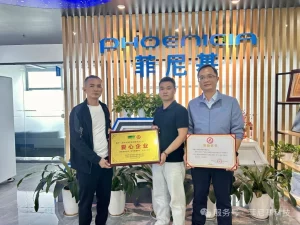
On December 19, 2025, the Shenzhen Baolong Community Foundation presented Phoenicia with the “Caring Enterprise” plaque and a donation certificate. Through its actions, Phoenicia demonstrates responsibility and commitment, spreading warmth with compassion and offering sincere blessings and tangible support to those in need.
Read More
Submit Product Inquiry
We Will Contact You Soon